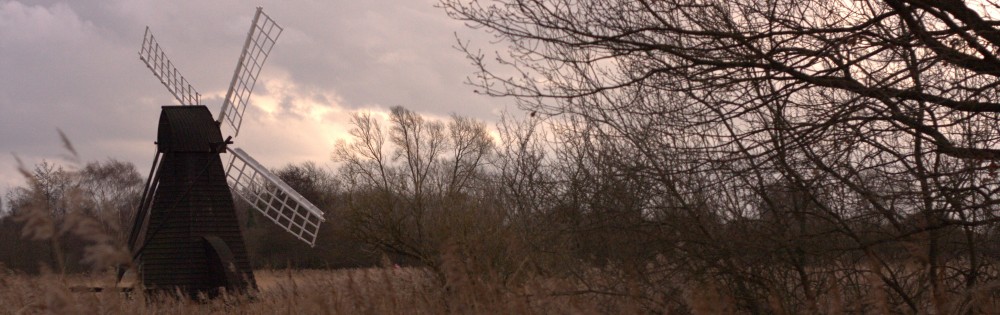
Conservation poetry: a field guide

Is there such a thing as conservation poetry? This question has been running through my mind since I talked with a Masters student who was doing a project on ‘conservation art’. I asked exactly what that meant. This led to an interesting discussion about different artists (primarily in graphic art or sculpture) whose work spoke of themes central to conservation. There are lots of examples, either of projects (the Ghosts of Gone Birds for example), organisations (such as the Artists for Nature Programme), or individuals (like the wonderful murals of my friend Rory McCann).

Yet while I can think of many artists whose work inspires me as a conservationist, I hesitate to say that my response necessarily matches their intention: the question for me is whether my feelings should be allowed to label their art? To me, artists do what they do, expressing what they see or hear in their heads. The notion that the resulting art, even if it portrays some aspect of nature, should necessarily be thought of as ‘conservation art’, seems wrong. Art just is. Its effects lie with the response of those who engage with it.

Continue reading

Conservation: we are what we eat

Living as I do in a northern European city, it is tempting to think of conservation as being something that happens ‘out there’ in tropical forests and coral reefs, with no connection to my everyday life. But on our increasingly globalised planet, the consumption choices that I and my fellow citizens make really do have a significant impact on biodiversity all around the world. A clear example is provided by the question of what we choose to eat and drink. There is overwhelming evidence that the ‘normal’ diet enjoyed by the world’s rich, and desired by the world’s poor, is highly damaging to biodiversity. Livestock are fed on soy grown on land cleared from forest. Fish are harvested using trawling technologies that devastate marine life. Tea, coffee and oil palm all replace natural forest, even when they are certified as biodiversity friendly. A recent article in Science makes the claim that “human carnivory is in fact the single greatest threat to overall biodiversity” because of the huge amounts of space and energy that go into meat production. More recently it has been claimed that giving up beef would reduce our carbon footprint more than giving up driving cars.

Given all this evidence, it might seem reasonable to expect that highly damaging food and drink products are being taken off our menus and supermarket shelves through a combination of regulation and consumer pressure. But of course this isn’t happening – far from it. So what is going on? Why is there not a sensible public debate about the relationship between food and nature? I recently took part in an event at Homerton College in Cambridge to discuss this issue, organised by Luciana Leite de Araujo, one of my fantastic Conservation Leadership students. I shared the stage with my colleague Ben Phalan, who knows far more about these issues than I do. This blog is an attempt to distil my thinking after the event, and to propose some ideas for a way forward. Continue reading

The Conservation Game

Watching the football World Cup in recent weeks, I was struck again and again by the images from cameras roaming the stadium, pulling out faces from the crowd. As matches moved into extra time, or the torture of penalties, they showed close ups of people in extremes of excitement, torment, delight or grief. I was reminded of my Mother’s dismissal of football on the television: ‘how ridiculous, it’s only a game’: perhaps the passion was less visible in those black and white days. Or perhaps she, like many people faced with televised sport-fests today, saw games as a distraction from more important things. Certainly the poet Rudyard Kipling, despite his romantic portrayal of the ‘Great Game’ in Kim, was dubious about their significance. In The Islanders he castigated those distracted from national needs by ‘the flannelled fool at the wickets or the muddied oaf at the goals’. For Kipling some things were too serious for games.

Is conservation something that is too serious for fun? Chris Sandbrook, Bruno Monteferri and I did a bit of work back in 2011 to explore this idea, looking specifically at the field of computer and online digital games. Perhaps predictably, we concluded that there was a lot of potential for conservation games: and certainly that conservation needed to be fun if it was to appeal to anyone who did not share the ascetic inclinations of a monastic ecology graduate foreswearing a city career.

We have now written some of our thinking down in a paper in Conservation Letters. This is a Wiley publication, and our employers will not pay to make it open access, but the gist is easily reported here. Basically, we got very excited by three things.

Continue reading

Lament of a Lawn Person

Last weekend I spent the best part of two hours mowing the lawn. This is not my favourite task: it comes ahead of using the vacuum cleaner or cleaning the bath (just), but way behind washing up or mending a puncture. Maybe somewhere around answering emails: a necessary evil. Why? Well, for one thing, it is quite tiring, without as far as I can see being very good exercise: a walk would be better for body and mind, and cycling to work beats mowing hands down. Also it is unpleasantly noisy: at this time of year, English suburbia rings to the throb of powered garden machinery, a kind of evening chorus, as solitary males display their fitness by competing to be loudest, sometimes flying off in a speeding courtship circuit on sit-on mowers.

But the main reason I dislike mowing is not its unproductive consumption of time, its ineffective burning of calories or the noise. It is that it seems such a stupid thing to do. Grass likes being cut. The more you cut it, the more it grows. If you fertilise it, and drill holes in it to aerate it, and kill weeds, it grows even faster. The alert gardener mows it every week, perhaps more often: especially as Spring turns into Summer, when days are long, the air warm, and the ground still moist (in May in Cambridgeshire you can almost hear grass growing). This is the challenge to which the eager gardener rises: you cut the grass and make it beautiful; it keeps growing, so you keep cutting so it remains beautiful.

Continue reading

Give Me Back My Greens

This is a hard time to be green. Since the financial crash in 2008, British government policy has been fixated with ‘growth’, and action for the environment has become profoundly out of fashion in the UK with politicians and media alike. No more dogsled rides for David Cameron to highlight climate change, and deep burial for his promise to run ‘the greenest government ever’. In November, the Sun reported that the Prime Minister had ordered aides to ‘get rid of the green crap’ to reduce household bills. It was, said the Daily Mail, all part of Opposition leader ‘Red Ed’s’ ‘green obsession’. In December, the Daily Mail ran an article on ‘fat cat Ecocrats’, identifying a ‘web of ‘green’ politicians, tycoons and power brokers’, profiting from these green levies.

But what does it mean to describe something as ‘green’?  The word has become so loosely used that its meaning is debased. Seemingly, it is ‘green’ to establish protected areas, restore ecosystems or protect rare species. At the same time, it is ‘green’ to oppose nuclear power, buy organic, promote renewable energy, oppose a new runway at Heathrow, try to control speeding on motorways, oppose housing development in the ‘Green’ Belt or build wind farms. Continue reading

What is conservation?

Last week I gave an introductory undergraduate lecture about conservation, which forced me to spend some time thinking about how to define what it is. This is more difficult than it perhaps should be – ‘conservation’ is a word that seems to make sense on an intuitive level (I feel that I know it when I see it), but stubbornly resists attempts to be wrestled into a clear definition. In the end I came up with a new definition, but was left wondering whether the scope of ideas and activities that fit within this definition have moved on beyond the usefulness of the term ‘conservation’ itself. This post is an attempt to explain why. Continue reading

Taken at the Flood

In southern England, January 2014 was the wettest since records began (the 1760s in the case of the Oxford Radcliffe Observatory).  Thousands of homes have been flooded, and large parts of the Somerset Levels have sat under water for weeks.  In a week of storms (‘stormageddon’, announced the Daily Mirror), a stretch of the sea wall at Dawlish in Devon was destroyed, cutting the only rail route to Plymouth and Cornwall. The Environment Agency was accused of ‘putting birds before humans‘.   In the Daily Mail, the Environment Agency was likewise accused of favouring conservation by failing to dredge Somerset rivers ‘and then spending £20m on bird sanctuaries’.

These headlines are perhaps no worse than we have come to expect from public debate about the environment in the UK, driven, as they are, by a combination of ignorance and outrage.  Indeed, by some standards they are quite sensible. A councillor for Henley–on-Thames (from the UK Independence Party), blamed the storms and floods on an act of God because of legislation to legalise gay marriage.   Meanwhile, The destruction caused by floods and storms have triggered that favourite British sport of pass-the-blame: victims blame the government for not doing more, the Local Government Minister blames the Environment Agency, whose Chairman replies by accusing politicians of ‘playing politics’ with the crisis, and for cutting his organisation’s staff. Continue reading

Community-based monitoring for science, management and local empowerment. A flash in the pan?

Citizen Science – research conducted in whole or in part by non-professional scientists – seems to be everywhere at the moment; from our back gardens to remote tropical forests, on our TVs and in our academic journals. It offers something for everyone: scientists like its potential to generate lots of data at low cost; sociologists like the way it changes the relationship between science and the public; the media like its ability to connect with individuals and their personal stories. There are concerns about the quality of data collected by amateur citizen scientists, but there is increasing evidence that they can be of comparable quality to professionals, if those collecting them receive the right training. Citizen Science has been used to look for climate patterns in historical weather records, to unlock the secrets of faraway galaxies, and to map the sacred sites of Congolese forest people. Conservation has been quick to jump on the bandwagon, with a whole range of applications, from detecting bats to identifying new species.

Citizen Science is not one thing, and typologies have been developed that recognise the different roles of citizens in the process (e.g. as passive participants or as active owners of the research) and the varied nature of the tasks performed by citizen scientists (e.g. as ‘sensors’ making observations or as problem solvers). Perhaps the most profound distinction is between individuals who participate in citizen science for pleasure as a hobby, and those for whom the findings have direct implications for their underlying wellbeing. The former category typically involves relatively wealthy people in developing countries (such as expert amateur birdwatchers) whereas the latter category is particularly relevant to conservation in developing countries, where many people depend on natural resources for their livelihoods.

Conservation citizen science in developing countries – often called ‘community-based monitoring’ – is growing in popularity. It has the potential, in theory, to create a fantastic win-win-win. Local people collect data on wildlife and resource use that are highly valuable to conservation and conservation science: win one. These data can then be fed into management of the same natural resources, creating improved long-term conservation outcomes: win two. At the same time, the process of involving local people in study design, data collection and (sometimes) management is empowering, which can create meaningful improvements in wellbeing for local people: win three. There is a real buzz at the moment about the potential of local citizen science to deliver this triple-win, but how robust is it in the face of changing conditions? In particular, to what extent is it dependent on the limitations of current technology? Continue reading

Peeling the onion: how deep should conservation go?

Conservationists and their organisations are often accused of treating symptoms and not causes – as Bill Adams said on this blog a few weeks ago, “mopping nature’s wounds not addressing the cause of injury”. Bill was talking about the big global challenges of conservation, but this problem applies equally at the day-to-day level. The park staff have no equipment? Buy them some from a grant, and don’t worry about where the replacements will come from. The government counterpart is corrupt? Work with him or her anyway, because they can get things done in the next few months. And so it goes on.

Conservation researchers in general, and political ecologists in particular, like to look deeper, unravelling the chains of explanation that get to the processes that underpin emergent threats. They (we) often argue that by applying short-term sticking plasters, conservation isn’t really making much difference for the long term, and that more conservation effort should go to addressing deeper underlying problems. In other words, (and mixing metaphors) conservation should make more effort to peel back the layers of the onion, to see what lies beneath. Continue reading

The Power of Evidence

It is hugely reassuring to suggest that decisions should be evidence-based. It sounds safe, sane, sensible. It seems self-evidently right. What else could they be based on? Guesswork? Hope? Prejudice? As a result the concept of evidence-based policy is on the ascendancy everywhere. Politicians love it, because it sounds so reasonable. Policy makers love it because it implies that decisions can be rational, free of bias, proofed against sectional interest. Scientists love it because it offers the opportunity to feed ‘sound science’ into the ears of policy-makers. So it seems an obvious fact that evidence-based policy is a good thing: yet as Sherlock Holmes comments in The Boscombe Valley Mystery ‘there is nothing more deceptive than an obvious fact’. Some caution may be warranted, for there are deceptive layers hidden by the term that are easily overlooked. Continue reading